




by Martina Markosyan: Battery storage deployed globally in 2026 could shift over a third of new daily solar generation into non-sunny hours,
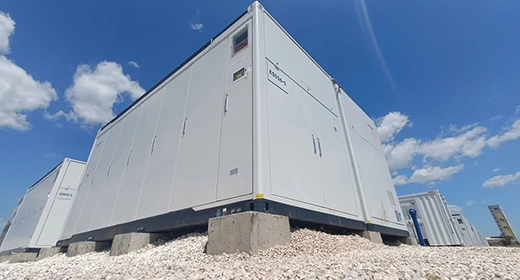 with Bulgaria and Chile installing enough battery capacity to shift more than three-quarters of theirs, according to a new report by energy think tank Ember.
Expected battery additions of 459 GWh in 2026, up 50% year-on-year, could shift 34% of new daily solar generation to non-sunny hours, nearly double the 18% shifted in 2025.
The estimate marks a theoretical ceiling rather than an operational reality, as not all deployed batteries are used to shift solar and many remain under-utilised, according to Ember’s Batteries have unlocked the era of anytime solar report.
Solar met a record 10% of global electricity generation in the first half of 2026, up from 8.9% a year earlier and nearly double the 5.6% share in H1 2023. On the average day, solar covered more than 25% of global electricity demand at midday but fell to near zero at night, leaving non-sunny hours a stronghold for fossil generation, Ember said.
Bulgaria and Chile installed enough battery capacity in 2025 to shift more than three-quarters of their new daily solar generation, at 77% and 76% respectively, making them global leaders, followed by Australia at 60%.
Bulgaria’s installed battery capacity grew from a near-zero base in 2023 to 3 GWh in 2025, then more than doubled to 8.6 GWh by May 2026. Solar plus batteries met nearly a quarter of Bulgaria’s electricity demand during the evening peak of 7-9 pm in H1 2026, up from virtually nothing in H1 2023, the report said.
In Chile, most new battery capacity was co-located with solar plants, helping cut curtailment and shift generation into the evening. Solar plus batteries met over 10% of Chile’s evening demand in H1 2026, also up from near zero three years earlier.
The EU lagged the global leaders, adding 27 GWh of battery capacity in 2025, enough to shift only 16% of new solar generation. The bloc’s solar installations fell 0.7% in 2025 to 65.1 GW, the first annual decline in a decade, as increasingly saturated midday output curbed growth, Ember said.
Meanwhile, the US added 58 GWh of battery additions in 2025, enough to shift around a quarter of new solar generation.